
HSP Application note #28
Plasticizer of Hansen Solubility Parameter (HSP)2010.4.5
HSPiP Team Senior Developer, Dr. Hiroshi Yamamoto
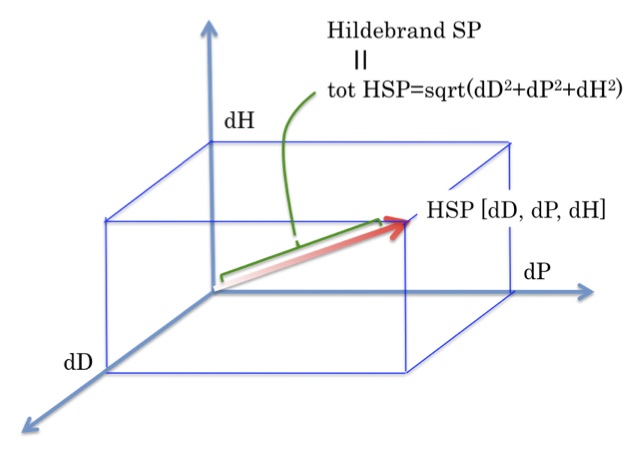
Hansen Solubility Parameters (HSP)Hansen Solubility Parameters(HSP) were developed by Charles M. Hansen as a way of predicting if one material will dissolve in another and form a solution. They are based on the idea that "like dissolves like" where one molecule is defined as being 'like' another if it bonds to itself in a similar way.
What can perhaps be surprising is that one can assign HSP to so many different things. Gases like carbon dioxide, solids like carbon-60, sugar, and biological materials like human skin, depot fat, DNA, and even some proteins all have HSP. The list can be continued with drugs, polymers, plasticizers, and in fact any organic material and even many inorganic materials like salts. The only requirement for an experimental confirmation is that the material must behave differently in a sufficient number of test solvents upon contact. Pirika JAVA Demo Applet calculate HSP. HSPLight is available here. |
I got GC and HPLC data of plasticizers for polymer. These are about Phthalic Acid Esters.
And I calculated HSP and made simulation of GC and HPLC.
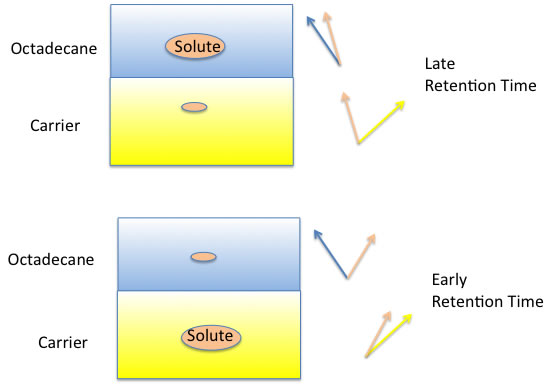
ChromatographyThe most popular column for HPLC is ODS column and this column contains Silica-gel covered by Octadecyl. When we insert some chemicals into this column, some chemicals dissolve to octadecyl alkyl chain deeply and some do not. So, highly interacted chemicals will delay to elute. Or some chemicals which are very easily dissolve to carrier liquid, elute very early.
We can evaluate these solubility with Hansen Solubility Parameters (HSP). Molecular size also play important role. Pirika Java Demo Applet design Carrier Solvent. HPLCDemo is available here. |
| Hcode | name | name | BP |
| 300 | DMP | dimethyl phthalate | 556.85 |
| 258 | DEP | diethyl phthalate | 567.15 |
| 59 | BBP | Benzyl Butyl Phthalate | 643.15 |
| 221 | DBP | dibutyl phthalate | 613.15 |
| 5540 | DOP | Bis (2-ethylhexyl)phthalate | 657.15 |
| 305 | DNOP | dioctyl phthalate | 657.15 |
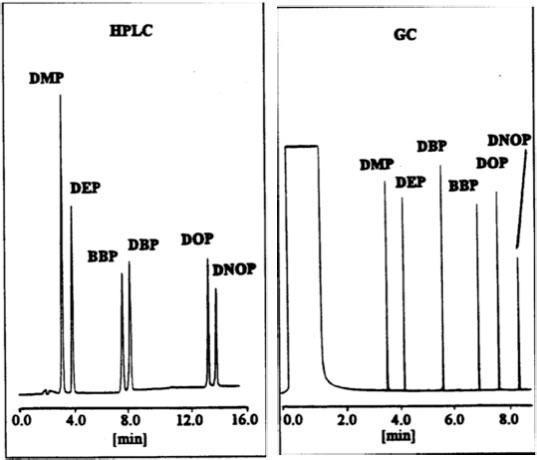
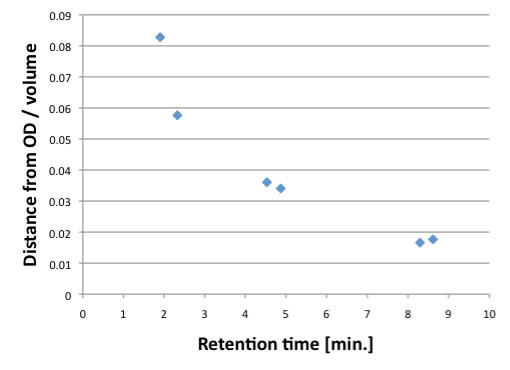
HPLC simulation, the distance from octadecane(OD) become short, that means solubility to OD increasing and retention time become large.
These HSP values are official values except Hcode(Hansen code) 5540.
HSP Estimation of 5540 seems OK with this result.
If you draw several molecules and calculate each molecules' properties, program will simulate Retention Time (RT) of OSD column for HPLC. If you want to know how to draw molecules, please refer to PowerTools applications. I have full version of this HPLC RT simulation program at PowerTools+ Applications.
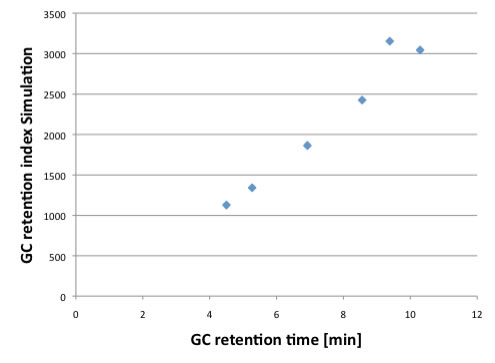
GC retention index(GCRI) simulation result with HSPiP ver. 3.0.25.
This case, Hcode 5540 become slightly higher than others.
This may cause from estimation accuracy of boiling point.
We will check when we revise next version.
These pair of HPLC GC data become so good help us to determine HSP and other properties.
If you want to know other type of plasticizers, please give us these information.
2011.4.25
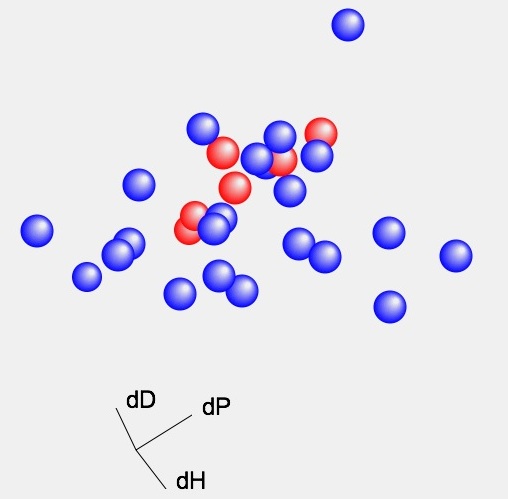
With polymer HSP listed in HSPiP, I made 3D plot program with plasticizers.
Drag=Rotate, Drag+Shift=Larger/Smaller, Drag+Alt or Command(Window key)=Translate.
If you are using HTML5 enable browser such as Chrome, Safari or FireFox (IE9 is out of support), you will see the Canvas. If you pick plasticizers (RED spheres), polymer (Blue sphere) name will appear. You can easily find nearest plasticizers to the polymer.
Please refer to Nitrile Butadiene rubber (NBR) article.
I explained how plasticizer work.
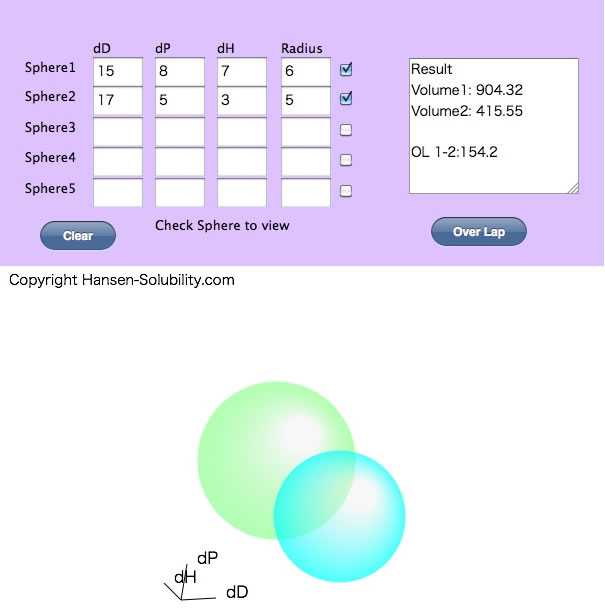
Some users want to calculate oligomer type of Plasticizer. In that case,they want to handle not only HSP distance but SPhere Overlap volume. I made that program as PowerTools+
Retention time for HPLC
HPLC analysis of PAHs
HPLC analysis of medicine of Epilepsia
HPLC analysis of Anti-oxidant.
HPLC analysis of Sulfa Drugs.
HPLC analysis of Plasticizer